


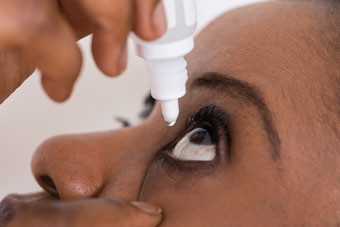
Eye Drops
Prescription eye drops for glaucoma help maintain healthy pressure in the eye. This is a very important part of the treatment routine for many people.
Please be certain that your glaucoma specialist knows about any other drugs you may be taking (including over-the-counter items like vitamins, aspirin, and herbal supplements) and about any allergies you may have. Glaucoma eye drops can have side effects which are often tolerated by the many patients but sometimes due to the general health of the patient, some types of eye drops cannot be given.
Selective Laser Trabeculoplasty (SLT)
Selective Laser Trabeculoplasty (SLT). With SLT, laser energy is delivered to the drainage system of the eye, the trabecular meshwork. This treatment is extremely safe and is well-tolerated by patients. The SLT technique is very gentle, and studies show that it does not damage the tissue of the drainage system. The treatment takes only minutes to apply, and there is usually no discomfort felt by the patient.
Following the laser treatment, one usually continues any existing glaucoma drops. After several weeks one returns to measure the intraocular pressure and to assess the success of the procedure.
Trabeculectomy
If medical and laser therapy are not sufficient in treating glaucoma, surgery can be performed. The most common type of glaucoma surgery is Trabeculectomy. In this procedure, a small area of the drainage system, the trabecular meshwork is removed.
A flap is made in the wall of the eye, the sclera, through which the fluid from within the eye can pass, decreasing the pressure within the eye. The fluid flows through the scleral flap into a space underneath the conjunctiva, and this space is called a bleb.
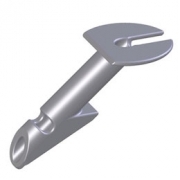
Glaucoma Shunt
Shunt
The second type of surgery is called a shunt, or Glaucoma Drainage Device. In this procedure, a small tube is placed through the sclera, or the wall of the eye, into the anterior chamber of the eye. Similar to the Trabeculectomy, excess fluid is able to pass out of the eye and collects in a reservoir, the bleb, underneath the conjunctiva.
With both types of glaucoma surgery, frequent visits are required in follow-up care to monitor the intraocular pressure and the healing of the eye. There is often mild irritation due to the manipulation of the eye tissue and also due to sutures on the surface of the eye. With time, these symptoms improve.